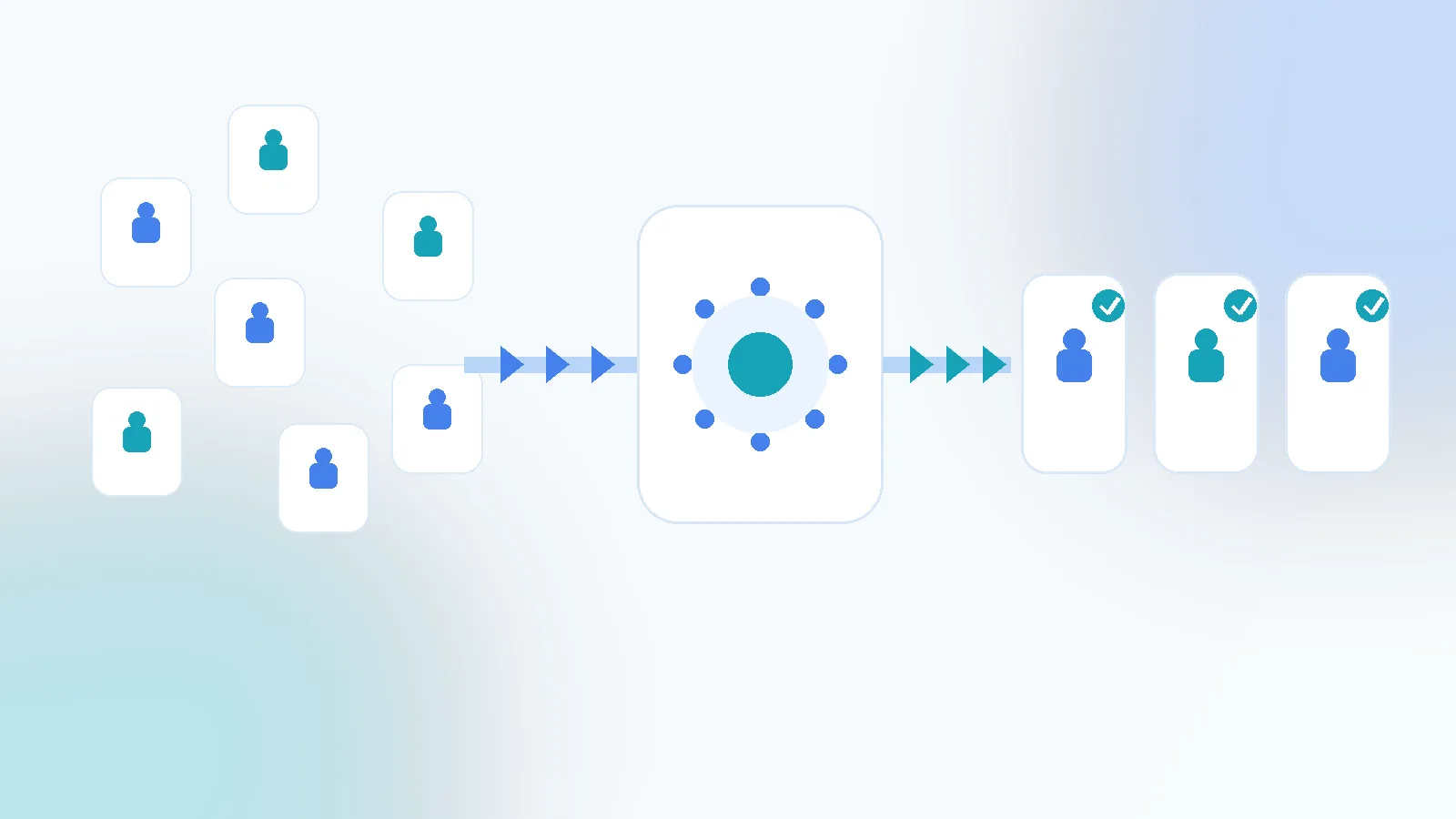
Does AI CV screening really save HR teams time, or is it just another HR tool that adds complexity?
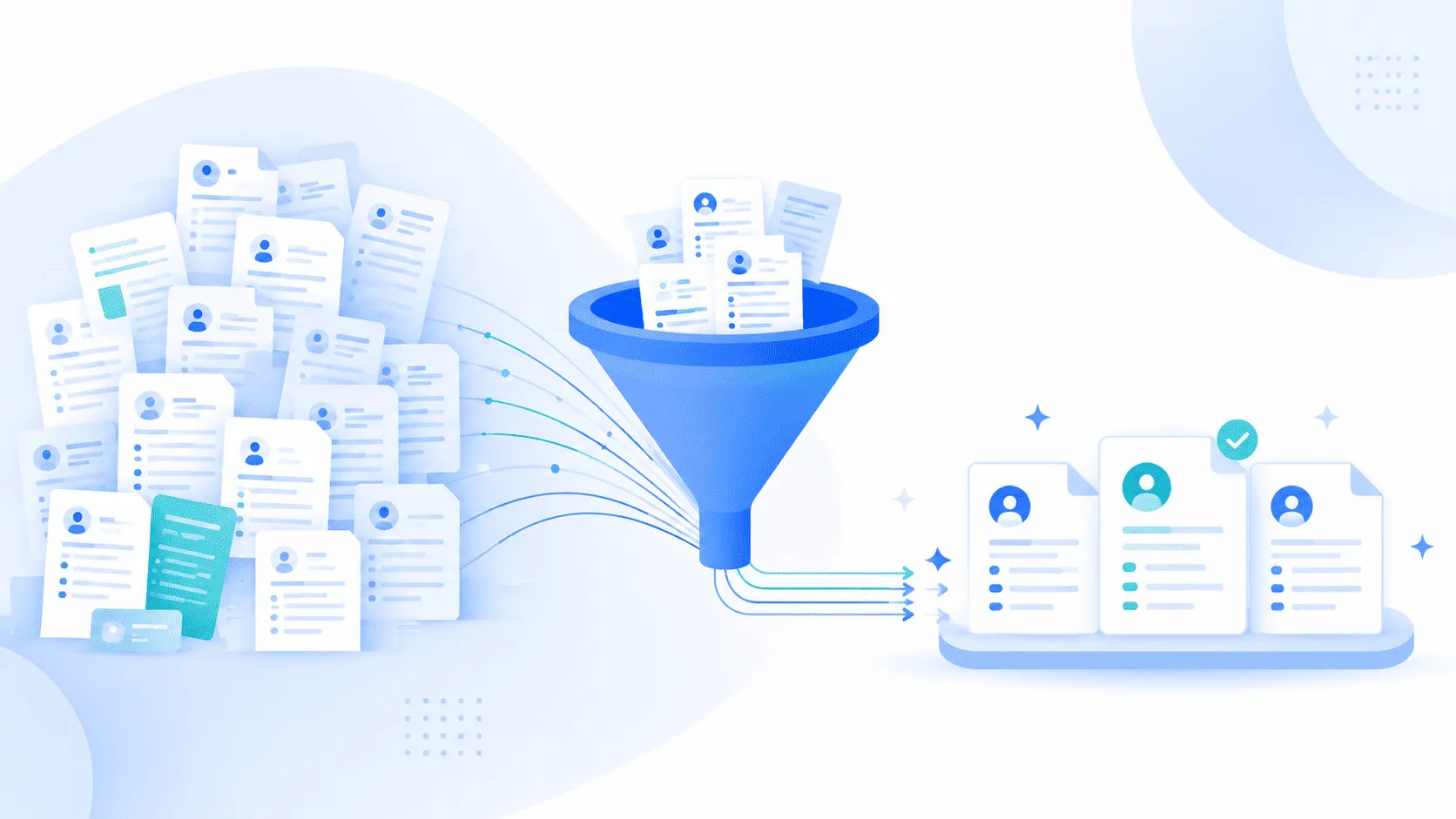
AI CV screening can save time when HR teams receive enough applications to make first-pass review repetitive and difficult to manage consistently. The real value is not simply reading CVs faster, but structuring the information, applying the same criteria to every application, explaining the score and preparing a shortlist for recruiter review. It becomes useful when the reasoning stays visible and the recruiter remains responsible for the final decision.
Why does manual CV screening cause problems, even for a small team?
The real issue isn't just the time lost reading each application one by one. It's also, and more importantly, the lack of consistency in how candidates get evaluated. A recruiter reading resumes late in the day, tired, doesn't read them the same way as one reading fresh in the morning with a clear head and full attention to detail. Two objectively equivalent candidates can end up treated very differently, simply because of when their resume happened to be opened. This invisible bias, hard to correct manually, ends up skewing part of the hiring decisions without anyone really noticing it happening.
How does AI CV review actually work in practice?
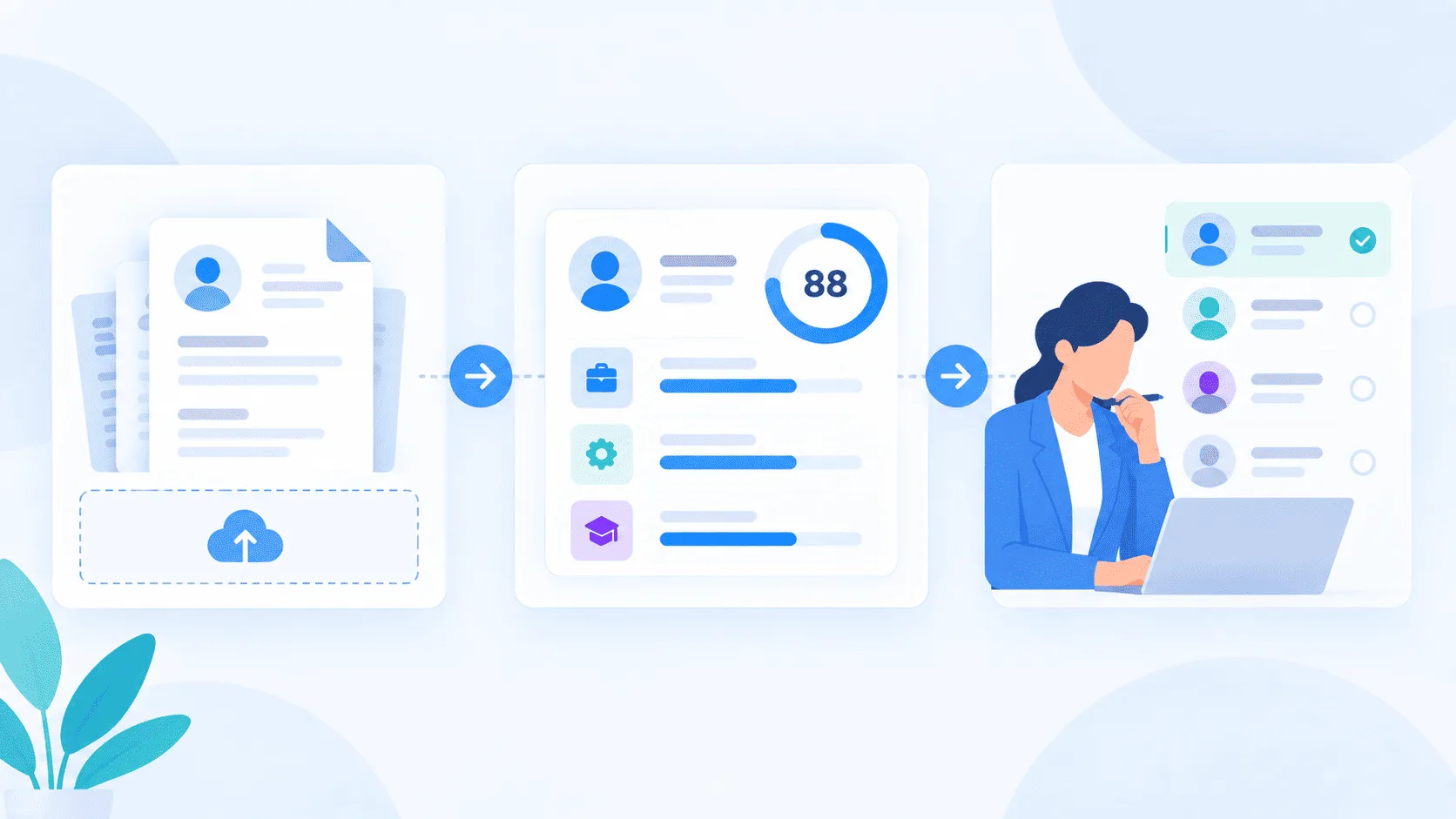
The process usually follows a few well-defined steps: the resume is submitted, the information it contains is automatically extracted through CV analysis, a score is calculated based on specific criteria, a detailed report is generated, and the recruiter receives a notification. What really makes the difference isn't speed on its own, but the quality of the scoring itself. A number by itself, with no explanation attached, doesn't mean much and doesn't build trust.
What criteria actually go into the score?
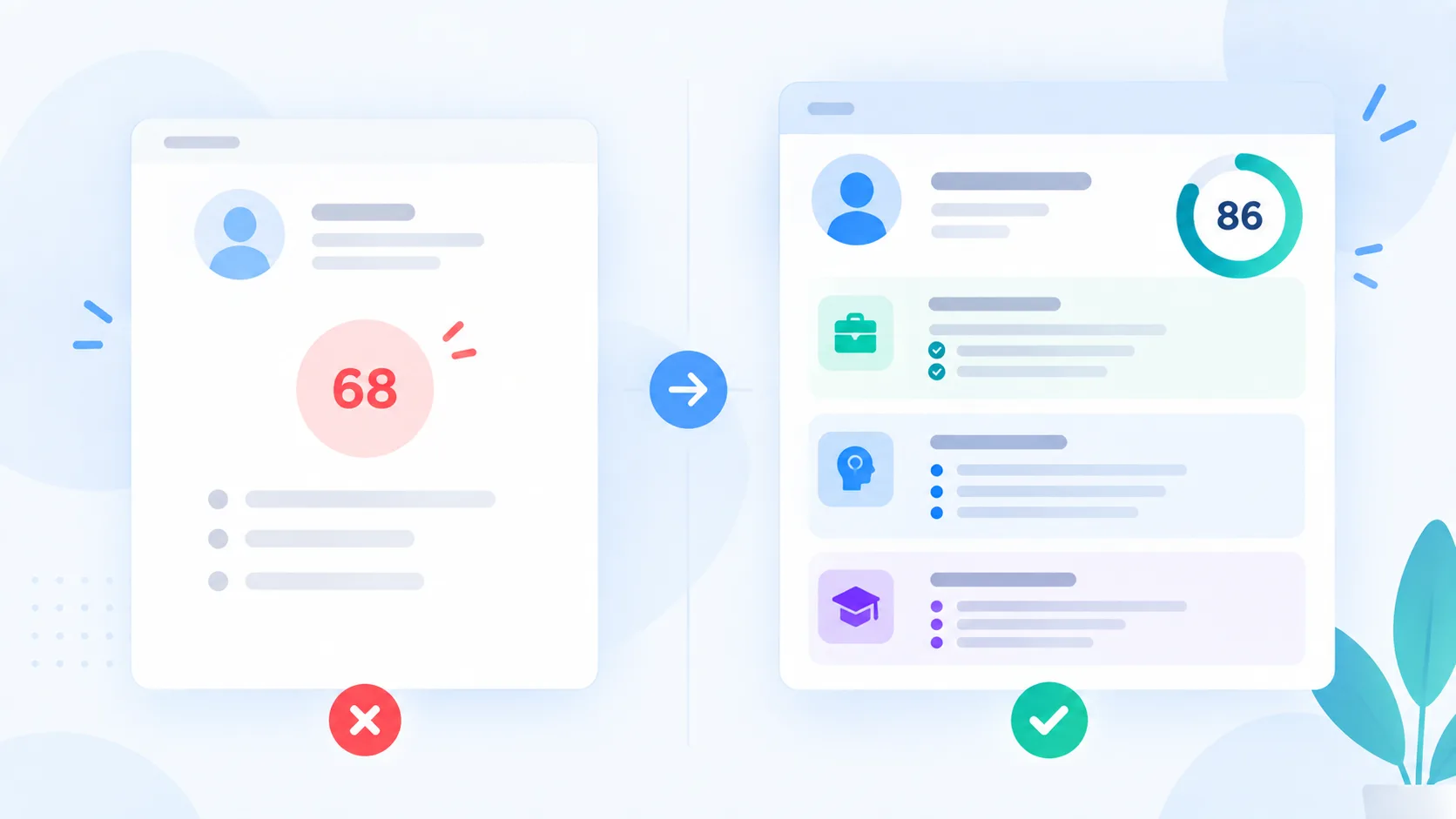
This is where a lot of tools fall short, presenting a raw number pulled out of nowhere. Monark Pepit's approach is built around documented candidate scoring: job fit against the specific job description, identified strengths, and points worth a closer look in the interview. Seeing the reasoning behind the number is what actually helps a recruiter understand why one candidate stands out ahead of another, rather than being asked to trust a black box.
Can this kind of software also help prepare interviews?
Yes, and this part is often the most underrated. Once the strongest profiles have been identified, you still need to run interviews that are genuinely relevant for each of them, rather than improvising the same way every time. Pepit automatically generates a set of interview questions tailored to each candidate's specific profile and the corresponding job description. This helps recruiters run more consistent interviews from one candidate to the next, instead of asking different questions depending on the mood of the day or how much time is left before the meeting.
Does this replace an actual recruiter?
No, and that's a point deliberately built into the product itself. The AI supports the recruiter's judgment, it was never meant to make the final hiring decision on its own. That's a conscious choice, and a particularly important one in a space as sensitive as hiring, where a bad automated decision can have real human consequences, not just a wrong number sitting in a dashboard somewhere.
Is this a gimmick, or something that actually holds up?
The "gimmick" label usually applies to tools that automate something without adding real reasoning behind it: a score with no explanation, a ranking nobody can question, a shortcut that saves time but loses trust along the way. What separates a genuinely useful tool from a gimmick is whether the automation comes with documentation a recruiter can actually check. When it does, the time saved doesn't come at the cost of understanding why a decision makes sense.
| Useful HR tool when… | More likely to become a gimmick when… |
|---|---|
| Scoring is explained | Only a raw score is displayed |
| The same criteria are applied consistently | Results cannot be questioned or reviewed |
| Recruiters can verify the reasoning | The ranking has to be trusted blindly |
| It integrates with the ATS workflow | It creates extra exporting and re-uploading |
| It saves time on first-pass screening | It tries to replace recruiter judgment |
| Final decisions stay with HR | Automation is treated as the final decision-maker |
How does it connect to the rest of your recruiting process?
AI CV screening doesn't work in isolation. It depends on ATS integration to receive applications automatically and return results where recruiters already work, instead of creating a separate step that needs manual exporting and re-uploading. Without that connection, even a well-designed scoring engine adds friction instead of removing it.
What actually gets automated, and what stays manual?
Three things get automated: reading the resume, scoring it against the role's criteria, and generating a shortlist. Everything downstream of that, the interview, the final judgment call, the offer decision, stays entirely with the recruiter. This split matters because it's exactly what separates a legitimate time-saving tool from something that tries to overreach into decisions it has no business making.
Common doubts teams have before adopting this kind of tool
Most hesitation about adding new HR tools comes from one of two fears: that the tool will filter out good candidates silently, or that it will push the team to stop thinking critically about who they hire. Both concerns are reasonable, and both are addressed the same way, by keeping the reasoning behind every score visible and by treating the shortlist as a starting point rather than a verdict.
Common mistakes when adding AI CV screening to your stack
The most frequent one is skipping straight to the ranked names without ever checking the reasoning, which turns a transparent tool into a black box through pure habit. Another is leaving job descriptions too vague, since the score can only be as precise as the criteria it's evaluated against. And some teams expect the tool to replace interviews and judgment entirely, which was never its purpose.
So, is it worth adding to your HR tools stack?
For a small team drowning in applications every time a role opens, yes, as long as the tool documents its reasoning instead of hiding behind a number. The time saved is real and comes from volume, not from cutting corners on quality. Used this way, it earns its place among your HR tools rather than sitting there as one more feature nobody trusts.
FAQ
Could AI CV screening accidentally rule out good candidates?
That's precisely why the score is explained rather than hidden behind a simple number. Recruiters can always revisit a lower-ranked candidate by checking the reasoning behind their score, and adjust their decision accordingly.
Do you need to replace all your HR tools to use this kind of solution?
No, not at all. A tool like Pepit adds a layer on top of what's already in place, without trying to replace everything overnight. The goal is to complement existing tools, not rebuild the whole stack from scratch.
How long does it take to analyze a resume with this kind of tool?
The processing itself is automatic and very fast. Most of the time saved actually comes from volume: instead of reading every resume one by one for hours, the recruiter gets a ranked shortlist directly, ready to act on.
Does AI CV screening work the same way for every industry?
The mechanics stay the same, but the criteria adapt to the job description provided for each role, so the evaluation reflects what actually matters for that specific position and sector.
Is the score the same across different recruiters reviewing the same batch?
Yes, that consistency is one of the main advantages over a manual read, which naturally varies from person to person and even from morning to evening for the same recruiter.
Discover MONARK PEPIT, AI-powered CV screening and interview preparation for recruiters.