
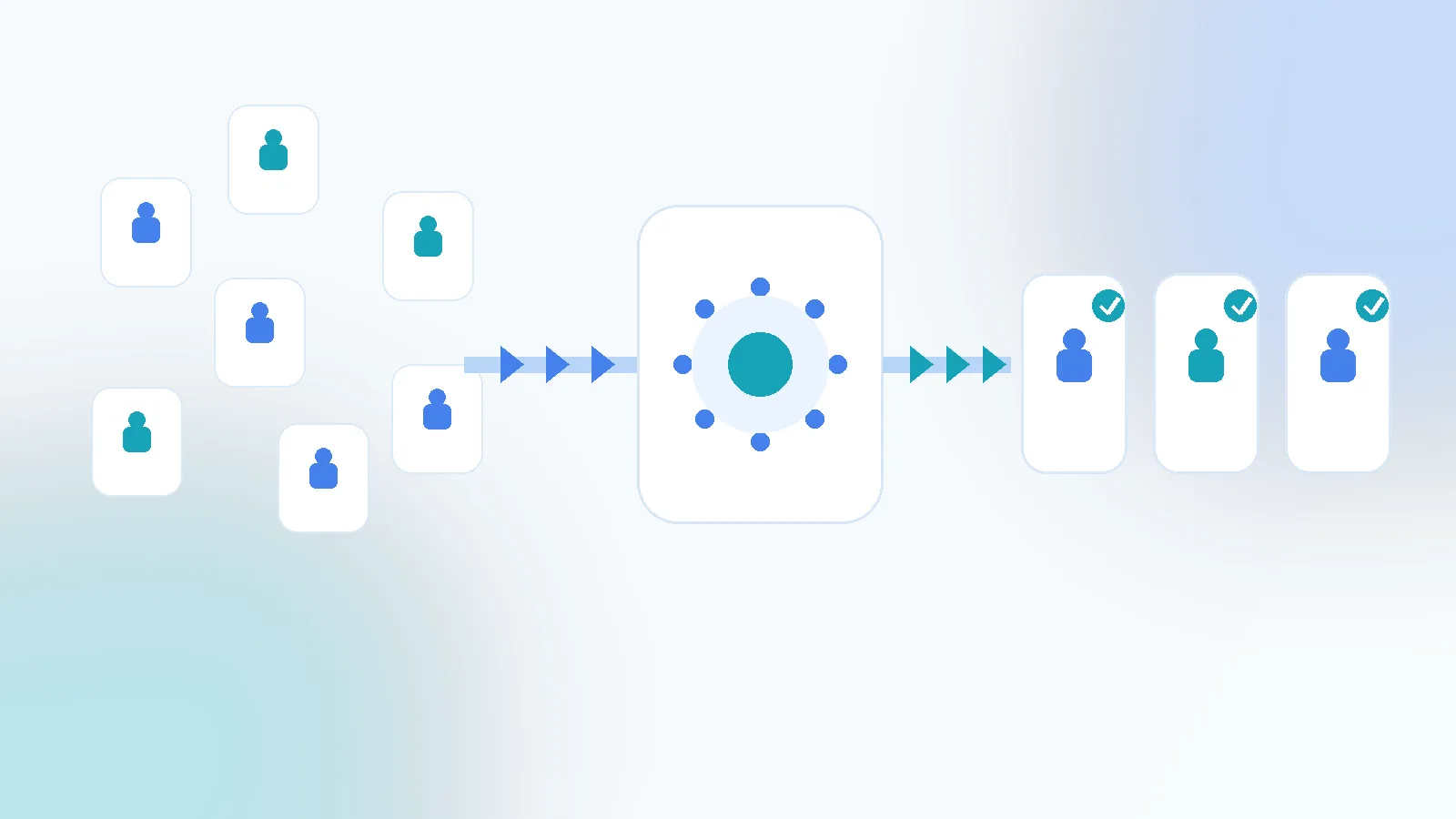
How can recruiters automate first-pass CV screening without replacing their ATS? By adding an automated screening layer to the recruitment workflow they already use. ATS integration allows incoming CVs to be extracted, analyzed and initially ranked against defined job criteria, while recruiters continue working from their usual system and remain responsible for every hiring decision. The goal is not to replace human judgment, but to make the first screening pass faster, more structured and easier to review when application volume increases.
Why does manual first-pass screening lack consistency?
A recruiter reading twenty resumes in a row doesn't give the same attention to the first one as to the eighteenth. Fatigue, the time of day, or simply the order in which applications arrived all influence, with no bad intent, how each profile gets perceived. This isn't a criticism of recruiters, it's just how sustained attention works over dozens of near-identical documents. Automating this first step doesn't take anything away from human judgment. It just removes this source of unintentional variation that can quietly cost you good candidates who happened to land in the wrong spot in the queue.
What exactly should good recruitment software automate?
Three specific things, no more: reading and extracting information from each resume, an initial ranking based on criteria defined for the role, and generating a usable shortlist without having to re-read everything from scratch. What should absolutely not be automated is the final hiring decision, which stays, and should stay, in the recruiter's hands. The goal is to remove the repetitive first read, not the judgment that comes after it.
Why does ATS integration matter more than a standalone tool?
A screening tool that sits outside your applicant tracking system creates extra work: exporting resumes, re-uploading them somewhere else, then copying results back in. ATS integration removes that friction entirely. Applications flow in through the system you already use, get read and scored automatically, and the results appear right where recruiters already work. The value isn't just the automation itself, it's that the automation happens inside the existing workflow instead of next to it.
What does ATS integration actually connect?
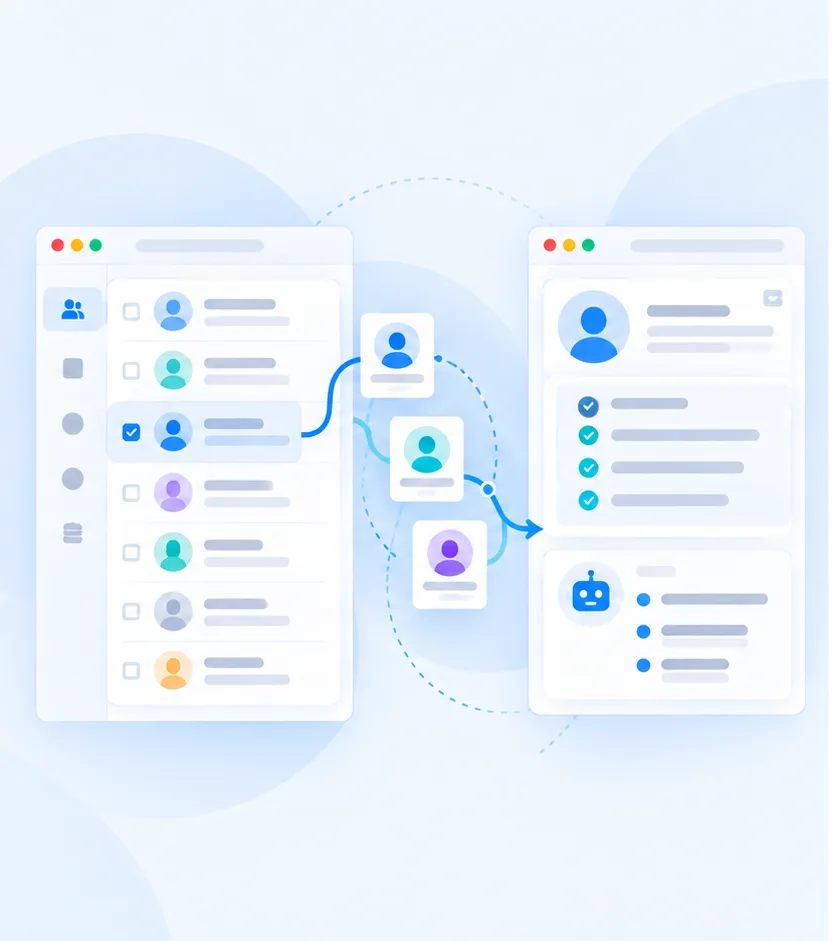
At a practical level, integration means the applicant tracking system and the screening layer share data both ways. New applications trigger automatic extraction and scoring without manual export. Results, rankings, and reasoning sync back into the candidate's profile inside the ATS, so recruiters never have to leave their usual dashboard to see why someone was ranked where they were. Nothing about the recruiter's daily tool changes, only what happens behind the scenes when a new resume lands.
| Step | What happens |
|---|---|
| 1. Application received | Candidate enters the ATS |
| 2. CV extraction | Experience, skills and education are structured |
| 3. First-pass screening | Profile is compared with job criteria |
| 4. Candidate scoring | A documented score and reasoning are generated |
| 5. ATS sync | Results are added back to the candidate profile |
| 6. Recruiter review | HR validates the shortlist and decides what happens next |
How do you go from dozens of applications to a usable shortlist?
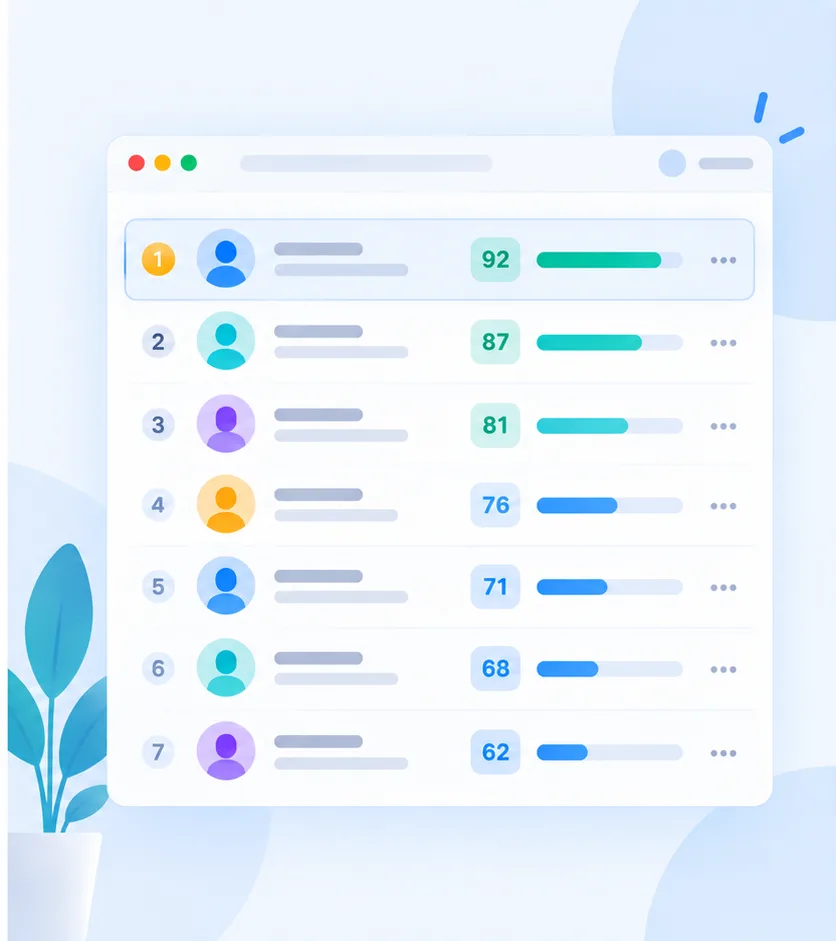
The key is consistency in the criteria applied to every application. Rather than comparing resumes against each other as you go, each application is evaluated individually against the same precise criteria, then ranked. Recruiters get a shortlist already ordered, along with the reasoning behind each position, instead of a pile of resumes to mentally compare against one another. This matters most exactly when volume is highest, since that's when manual comparison breaks down fastest.
How is each candidate scored during this first pass?
Ranking on its own isn't enough if nobody can explain it. Each candidate that comes through gets a documented candidate score built on job fit, identified strengths, and points worth a closer look in the interview. That's what turns a raw ranking into something a recruiter can actually reason about and trust, rather than a black-box order they have to take on faith.
What happens to the resume itself during this process?
Before any score gets calculated, the resume has to be read and understood in a structured way. This is where CV analysis comes in: extracting experience, skills, and background into a consistent format that can then be evaluated against the job description. ATS integration is what delivers the resume into this pipeline automatically, without anyone having to upload it a second time.
Does ATS integration replace the recruiter's judgment?
No, and this is worth repeating because it's the most common misunderstanding about this kind of automation. The system produces a ranking and the reasoning behind it, but every decision to move a candidate forward or rule them out stays manual. What changes is how much time gets spent getting to that decision, not who makes it.
What Monark Pepit offers for this first pass
Monark Pepit automates extraction and scoring as soon as an application comes in through your connected ATS, with a detailed report available immediately for each profile. Recruiters can then focus on the applications that genuinely stand out, skipping the full read-through of every resume one by one, while still being able to check the reasoning behind any score they're unsure about.
Before automating first-pass screening, check that:
✅ the job description is precise;
✅ screening criteria are clearly defined;
✅ your ATS can exchange candidate data;
✅ scoring results remain explainable;
✅ recruiters can override or review rankings;
✅ final decisions remain human;
✅ the workflow avoids duplicate manual entry.
Common mistakes when automating first-pass screening
The most frequent one is leaving the job description too vague, which weakens every ranking calculated from it since the system has little to evaluate candidates against. Another is treating the shortlist as a final decision rather than a starting point, skipping the reasoning behind it entirely. And some teams try to run this kind of screening disconnected from their ATS, which reintroduces the manual export-and-reupload friction that integration exists to remove in the first place.
Does this fit into your existing HR tools stack?
Yes, and it's designed to. ATS integration doesn't ask you to replace your recruiting stack, it adds a layer on top of what's already there. Alongside the rest of your HR tools, it handles the repetitive first read so the tools you already rely on for interviews, communication, and tracking keep doing what they do best.
FAQ
Does automated screening work for every type of role?
Yes, as long as a clear job description is provided upfront. The more precise the role's criteria, the more relevant the automated screening becomes.
Does the recruiter lose control of the process once the tool is active?
No, the tool produces a ranking and a shortlist, but every decision to move forward with or rule out a candidate stays manual and stays under the recruiter's control.
Do you need a full HR recruitment platform to benefit from this automation?
No, this kind of automation can work as an added layer on top of your existing HR tools, without requiring you to replace everything at once.
How long does it take to connect an existing ATS?
Setup time depends on the system already in place, but the goal is a connection that requires no change to how recruiters currently work day to day.
What happens if the ATS integration misses a strong candidate?
Every score comes with its reasoning attached, so a recruiter can check a surprising result and pull a profile back into consideration rather than relying on the ranking alone.
Discover MONARK PEPIT, AI-powered CV screening and interview preparation for recruiters.