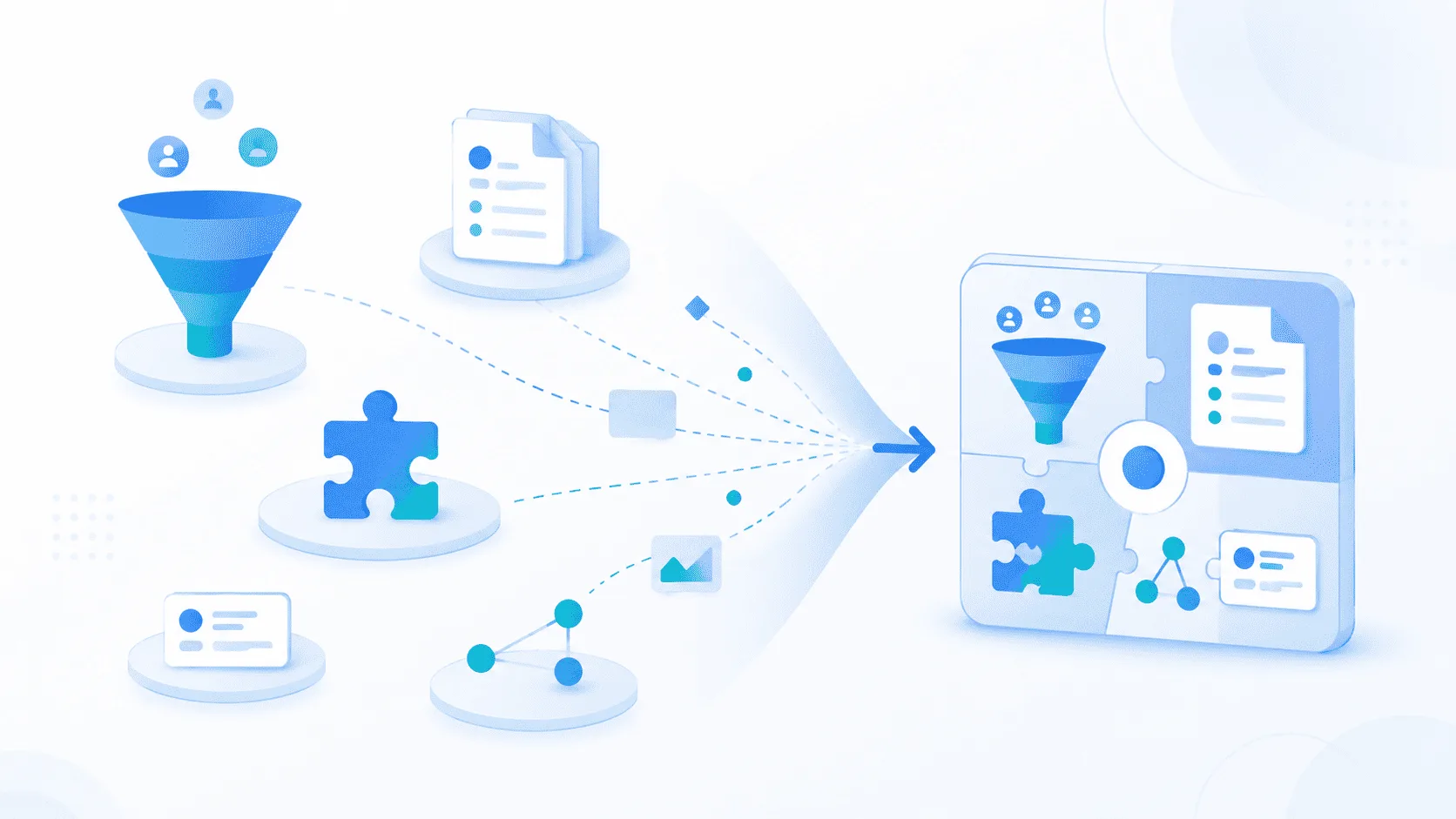

- How long does a service business CRM implementation actually take?? Starting from an already-built, adapted solution rather than a classic custom build, most service businesses go live in a matter of weeks, not the six to twelve months people picture by default. "We're going to implement a CRM" is a sentence heard often in meetings, usually followed by a lot of vagueness about what it actually involves. Here's what it actually involves, step by step.
- rerr
Why do so many companies keep postponing this project?
The most common fear isn't the cost, it's the duration and the disruption to daily activity during the transition. The image of a classic custom build, which can take six to twelve months before the first genuinely useful line of code, has become the default reference in a lot of people's minds. The result: teams keep juggling Excel, WhatsApp, and sticky notes for years, simply because the alternative seems too heavy to even consider, when the reality of an already-built foundation is very different.
How long does service business CRM implementation actually take?
When starting from an already-built base rather than a fully custom development, the timeline shifts completely. A full deployment typically takes four to eight weeks, sometimes just three weeks for the simplest projects with no particular sector-specific complexity. That timeline covers the whole process: understanding the existing sales or client process, adapting the pipeline stages, configuring fields specific to the business, training the teams who will use it day to day, and migrating existing customer history rather than starting from zero after years of tracking in a spreadsheet or another tool.
What does each week of implementation actually involve?
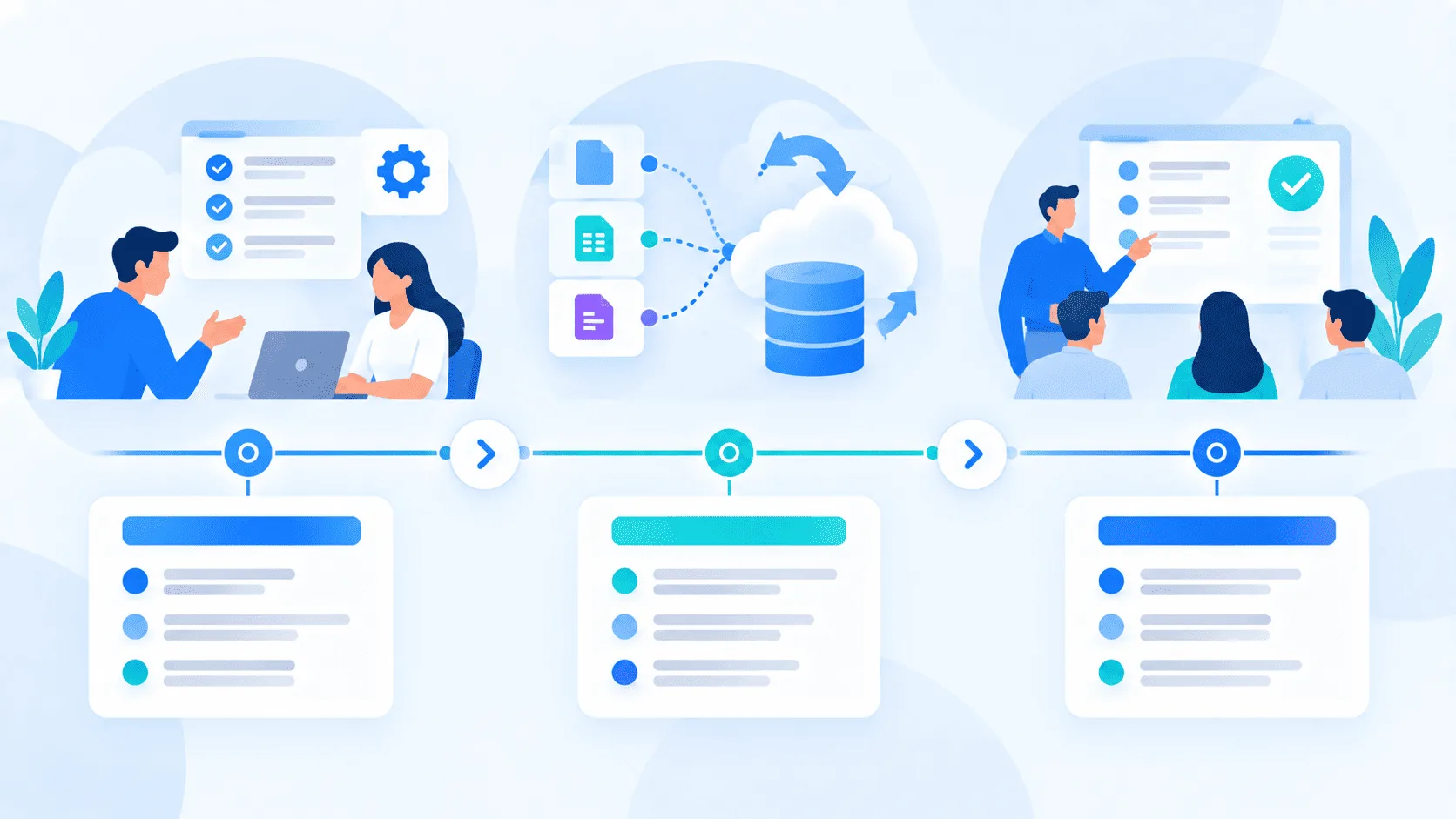
The first week or two usually cover the listening phase and configuration: mapping the current process, setting up pipeline stages, and adjusting fields to match how the business actually works. The middle stretch handles data migration and integrations, moving existing client records and connecting the tools already in daily use. The final week or two are for training and go-live, with the team learning the system on real data before fully switching over. This staged order is what keeps a four-to-eight-week timeline realistic rather than an estimate that quietly slips.
| Phase | Durée | Ce qui se passe |
|---|---|---|
| Écoute et configuration | Semaines 1-2 | Cartographie du processus de vente/client actuel, mise en place des étapes du pipeline, ajustement des champs métier |
| Migration des données et intégrations | Semaines 2-5 (variable selon le volume) | Transfert de l'historique client existant, connexion des outils déjà utilisés au quotidien |
| Formation et mise en production | Dernières 1-2 semaines | Apprentissage de l'équipe sur des données réelles, bascule complète vers le nouvel outil |
| Total | 3 à 8 semaines | 3 semaines pour les projets les plus simples sans complexité sectorielle particulière, jusqu'à 8 semaines pour les configurations plus poussées |
Does industry-specific adaptation really extend the timeline?
Not necessarily, and that's precisely the point of starting from a foundation already designed to adapt. Whether the business is in construction, real estate, solar energy, education, home services, or B2B consulting, the vocabulary and pipeline stages change, but the underlying structure stays the same, as covered in how a custom CRM adapts to different industries. A service business CRM built for one sector doesn't need to be rebuilt from scratch for another, only the fields, stages, and reporting priorities are adjusted to fit the business.
What makes a service business CRM implementation different from a product-based one?
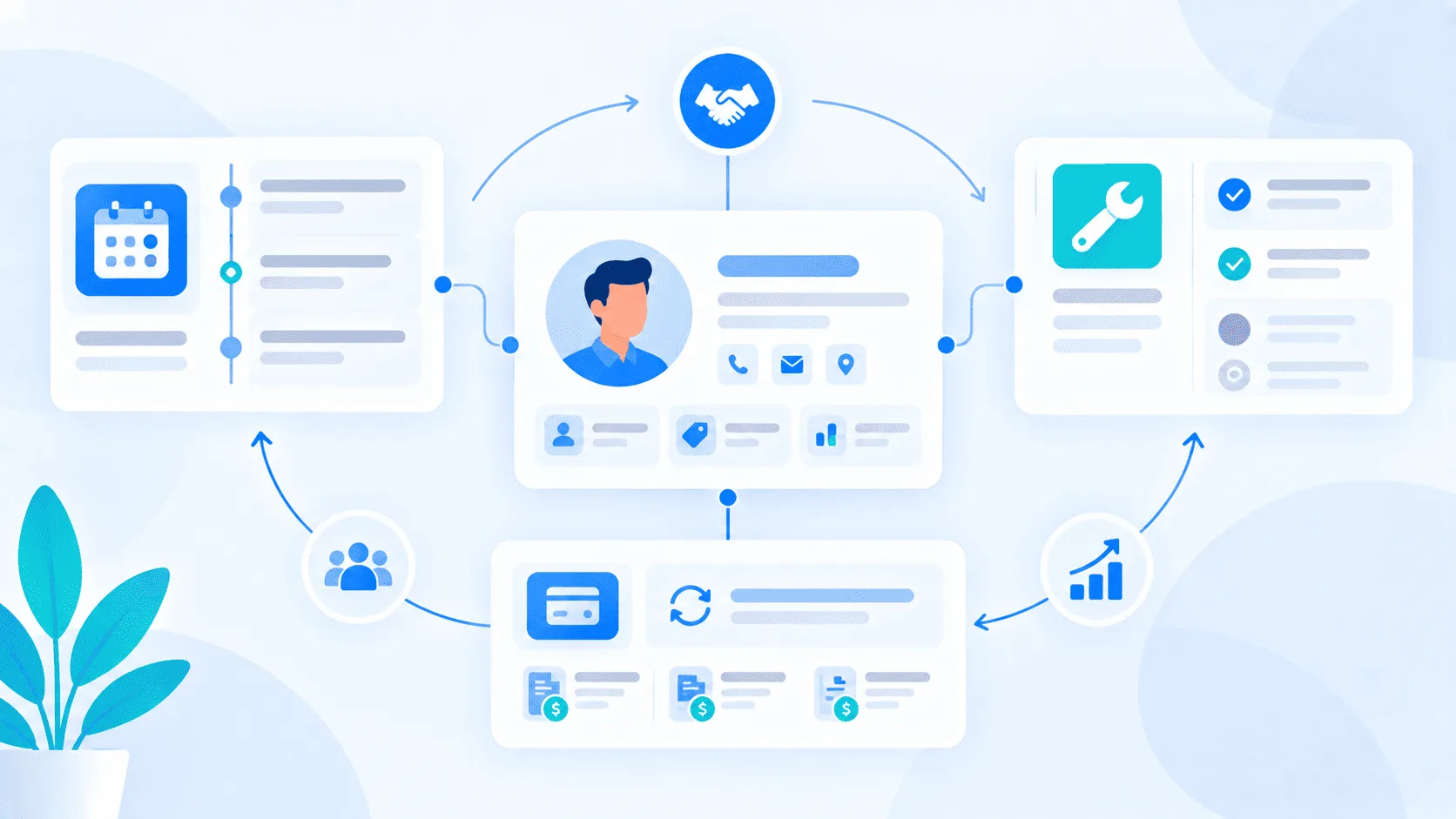
A product-based sale usually ends at the close. A service business keeps the relationship going: recurring visits, ongoing engagements, ticket-based support, ordeliverables spread over weeks or months. Implementation for a service business CRM has to account for this from the start, tracking not just when a deal closed, but how the relationship continues afterward: scheduling, service history, and recurring billing tied to the same client record rather than treated as a separate, disconnected process.
Who needs to be involved during implementation week to week?
The people running the day-to-day client relationship matter more here than any single decision-maker describing the process from the outside. During the listening and configuration weeks, input from whoever actually schedules visits, manages recurring clients, or tracks engagement deliverables keeps the setup grounded in reality. By the training weeks, the whole team that will use the system daily needs to be involved, not just a single point of contact relaying instructions back to everyone else.
Does the team need to pause daily work during implementation?
- The team keeps working with their usual tools during the configuration phase, and the switch happens once the new system is ready and the team has been trained, not before. This is one of the most common misconceptions driving the postponement mentioned earlier: implementation doesn't mean stopping the business to rebuild its plumbing, it runs in parallel until the moment everything is actually ready to switch over.
How does preparation beforehand affect this timeline?
Preparation done before the project starts, mapping the sales or client process and gathering a rough picture of existing data, is what keeps the four-to-eight-week window realistic instead of optimistic. The steps covered in what to prepare before CRM software implementation directly shorten the listening and scoping phase, since less time gets spent clarifying basics once the project is already underway.
What Monark CRM offers on this exact point
Monark CRM starts from an already-built, proven foundation, rather than a fully custom development or a generic subscription to configure alone. The platform covers the entire customer relationship cycle: leads, customer records, sales pipeline, calendar, tasks, product catalog, and reporting. Implementation includes training teams, integration with tools already in place, and ongoing support over time, with the option to progressively enable AI features, module by module, based on the priorities that emerge once the tool is actually in use.
What happens after go-live, is the timeline really over?
Go-live isn't really the end of the process, it's the point where the system starts reflecting real usage instead of an assumption made during configuration. The weeks right after launch usually surface small adjustments: a field that needs renaming, a stage that doesn't quite match reality, a report that needs a different filter. Good support treats these as part of the same project rather than a separate billed engagement, and this is also the point where AI features tend to get enabled progressively, once there's real data to build on.
How much does implementing a service business CRM cost?
The cost depends on your needs, the level of customization, and the complexity of the project, generally within the same $12,000 to $30,000 range that applies to custom CRM software more broadly. After an initial assessment, a tailored estimate follows based on your specific requirements, factoring in how much recurring-relationship complexity, like scheduling or engagement tracking, needs to be built into the configuration.
FAQ
- Does the sales team need to stop working during CRM implementation?
The team keeps working with their usual tools during the configuration phase, and the switch happens once the new system is ready and the team has been trained, not before.
- How much does implementing a customized CRM cost?
The cost depends on your needs, the level of customization, and the complexity of the project. After an initial assessment, we provide a tailored estimate based on your specific requirements.
- Can features be added after the initial implementation?
Yes. The CRM can evolve over time, with additional modules or AI features enabled progressively, module by module, based on the priorities that emerge once the tool is actually in use.
- Is the timeline different for a service business compared to a product-based company?
The overall range stays similar, four to eight weeks, but a service business sometimes needs extra configuration time around scheduling and recurring client history, which can push toward the higher end of that window.
- What's the fastest a service business CRM implementation can realistically go?
Around three weeks for a simple setup with limited data to migrate and few integrations, though most projects with real complexity land closer to six to eight weeks.
Discover MONARK CRM, a customizable CRM, already built, adapted to your business.